
1. Overview
This test evaluates the performance of humidifiers and similar appliances in suppressing the growth of bacteria and fungi within the appliance.
2. Applicable Products
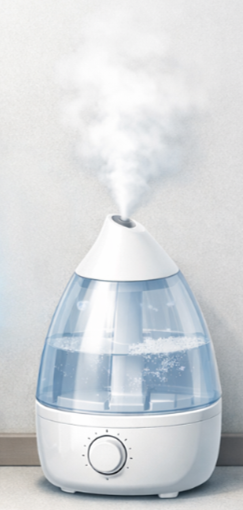
・Humidifiers
・Air purifiers equipped with a humidification function
3. Standards and Regulations
・Japan Electrical Manufacturers’ Association (JEMA) Voluntary Standard HD-133: Test Method for Evaluating Suppression Performance against Mold and Bacteria in Humidification Water
4. Test Method
For test specimens that suppress microorganisms by means of an antimicrobial agent, an appropriate amount of the antimicrobial agent is added to 1 L of purified water, which is then held at 23 ± 5℃ for 3 to 24 hours to prepare the test water. Subsequently, 1 mL of the test microorganism suspension is added to 10 mL of the test water, and the mixture is incubated at 23 ± 5℃ for 3 to 24 hours before determining the microbial count. Suppression performance is evaluated by comparison with a control condition in which no antimicrobial agent is added.
For test specimens that suppress microorganisms only during operation (e.g., by ultraviolet irradiation or a heating element), an appropriate amount of the test microorganism suspension is introduced into the humidification tray, and the suppression mechanism is operated for 3 to 24 hours before determining the microbial count. Suppression performance is evaluated by comparison with a control condition in which the suppression mechanism is not operated.
According to the standard, the test microorganisms should be selected from the following bacteria and fungi (molds and yeasts):
For claims of bacterial suppression: one or more of the following:
Legionella spp.
Escherichia coli
Staphylococcus aureus
Pseudomonas aeruginosa
Methylobacterium spp.
For claims of fungal suppression: two or more of the following:
Cladosporium cladosporioides
Exophiala spp.
Phoma spp.
Rhodotorula spp.