1. Overview
Our center evaluates the efficacy of treated products and materials against various microorganisms and viruses in accordance with JIS, ISO, and other relevant standards. For certain test methods, products that satisfy the specified performance criteria may qualify for certification marks.
2. Applicable Products
・Antimicrobial-treated products (e.g., plastics, metals, ceramics)
・Antifungal-treated products (e.g., plastics, metals, ceramics)
・Antiviral-treated products (e.g., plastics, metals, ceramics)
・Other products and materials (including raw materials)
3. Standards and Regulations
・JIS Z 2801 – Antimicrobial products: Test for antimicrobial activity and efficacy
・JIS Z 2811 – Repeated sanitizing performance test
・JIS L 1902 – Testing and evaluation methods for antibacterial activity of textile products
・JIS L 1921 – Testing and evaluation methods for antifungal activity of textile products
・JIS Z 2911 – Methods of test for fungal resistance
・JIS R 1702, JIS R 1752, JIS R 1705, JIS R 1706, JIS R 1756, and related standards – Testing for photocatalytic antimicrobial materials and products
・ISO 21702 – Measurement of antiviral activity on plastics and other non-porous surfaces
・ISO 18184 (JIS L 1922) – Determination of antiviral activity of textile products
4. Test Method
Antimicrobial, Antifungal, and Antiviral Activity Tests
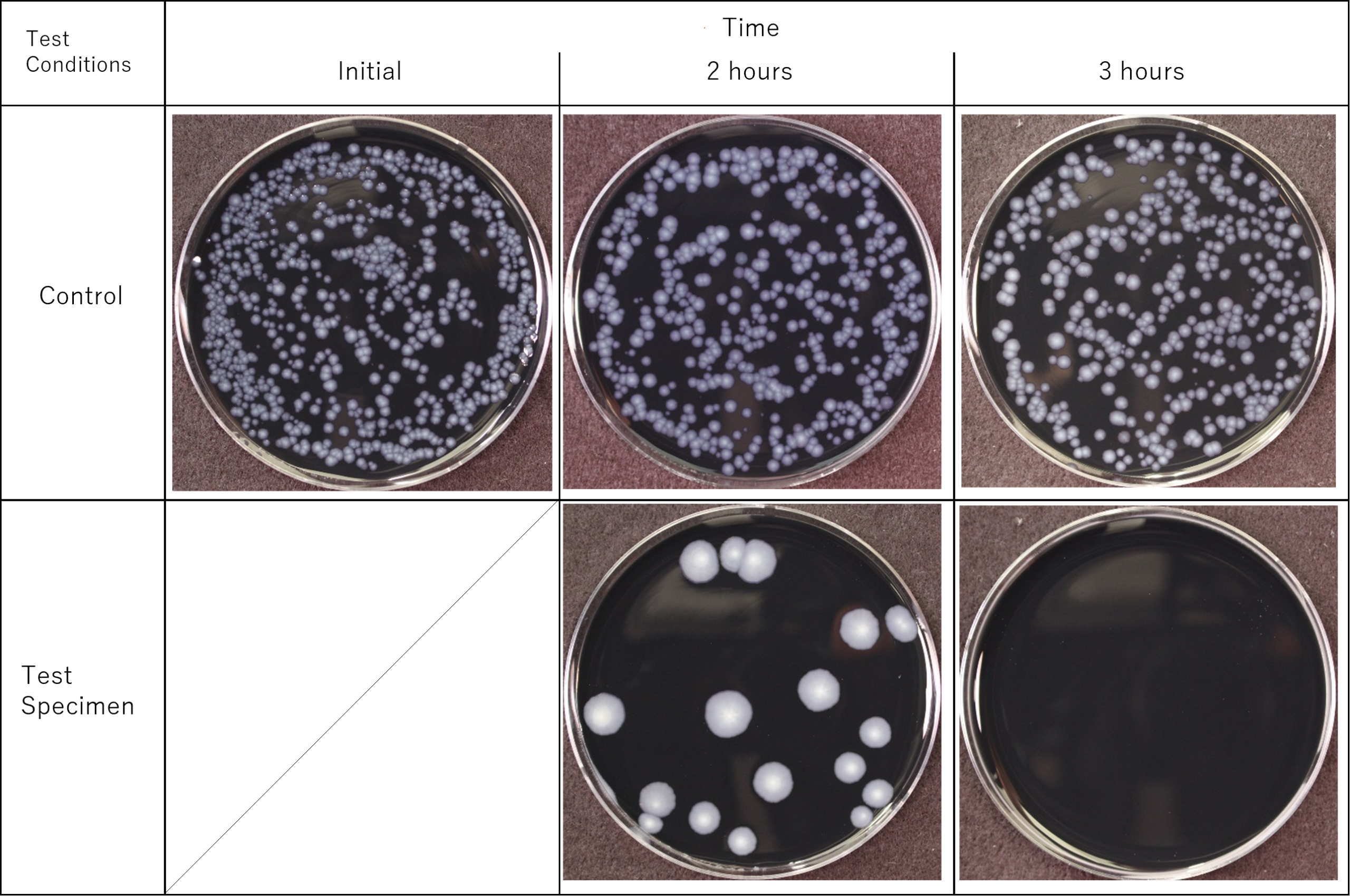
The test microorganism is inoculated onto the product surface and allowed to remain for a specified contact time. The number of surviving microorganisms is then determined to evaluate the antimicrobial, antifungal, or antiviral activity of the product.
Fungal Resistance Test
The product is inoculated with fungal spores and incubated for a specified period. Fungal resistance is evaluated based on the extent of fungal growth observed on the product.
Repeated Sanitizing Performance Test
The product is repeatedly challenged by inoculating it with the test microorganism and allowing it to remain in contact for a specified period. After repeated exposure, the product is inoculated once more with the test microorganism, and the number of surviving microorganisms is determined to evaluate its antimicrobial performance.
In addition to standardized methods, we can design customized studies based on our extensive testing experience and scientific expertise to meet the specific objectives and requirements of our clients.